A different approach to measuring PAR
1% more light = 0,5 - 1% more production
This well-known rule of thumb shows how directly light drives yield. Light is the fuel for photosynthesis, and every decision on screens, coating material, and grow lights changes how much of it reaches the crop. Traditionally, growers steer on the radiation sum: the total global radiation measured outside by the weather station, in J/cm² per day. This number can reveal the amount of assimilates being produced by the plant. However, since this value is measured outside it can identify potential changes such as a different screening or light strategy or a potential coating application.
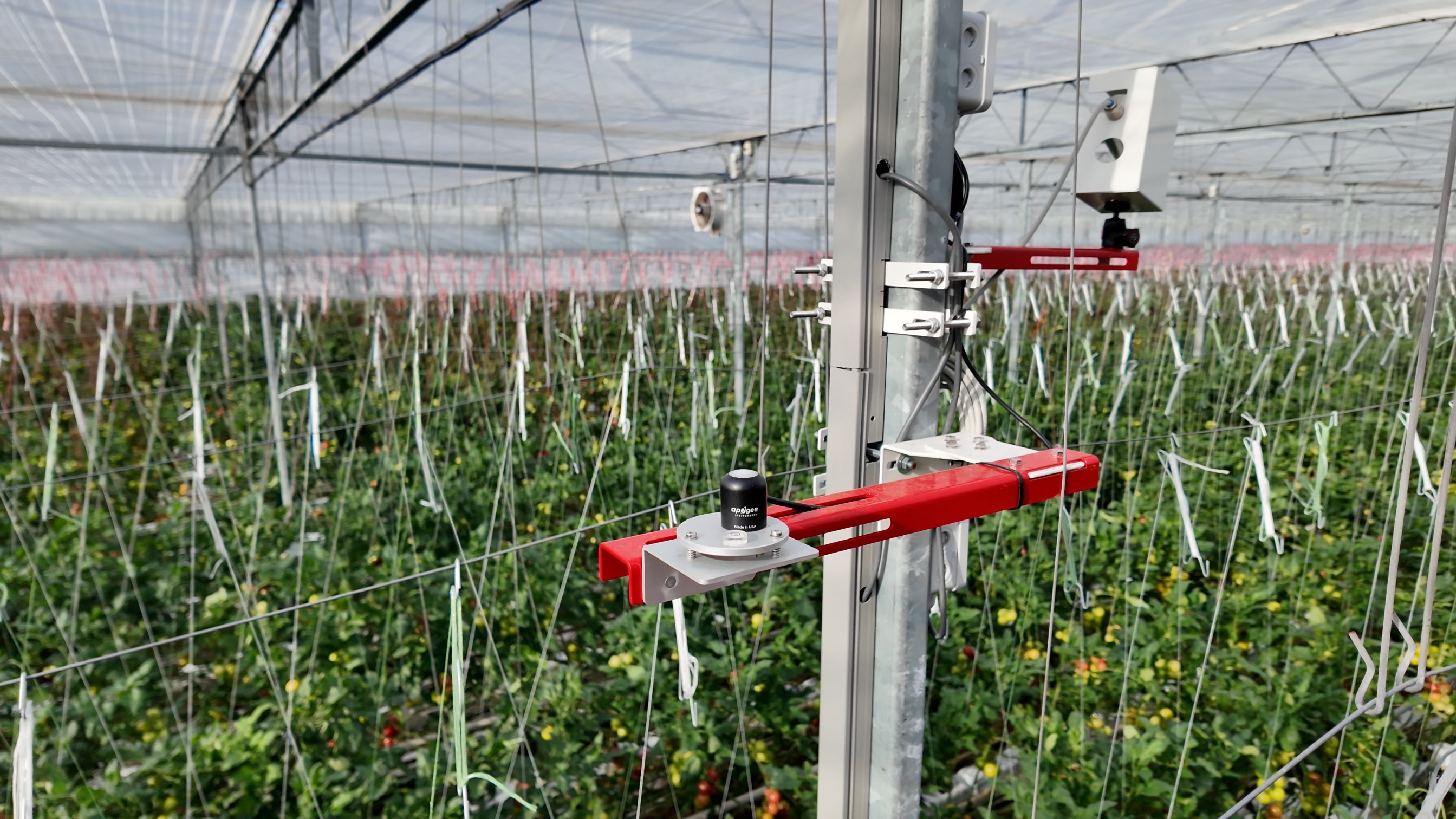
Photosynthetic Active Radiation (PAR) is the part of the light spectrum between 400 and 700 nm that plants use for photosynthesis. It is measured as the number of light particles (photons) arriving per square metre per second, in µmol/m²/s.
The PAR sum is the total amount of photosynthetically active light the crop actually receives in mol/m² per day (the Daily Light Integral, DLI). Measured inside at crop level, it automatically includes the effect of glass, dirt, coating, screens, construction, and grow lights.
Worldwide, a PAR sensor is known to be a must in order to know precisely your assimilate production and steer your crop accordingly.
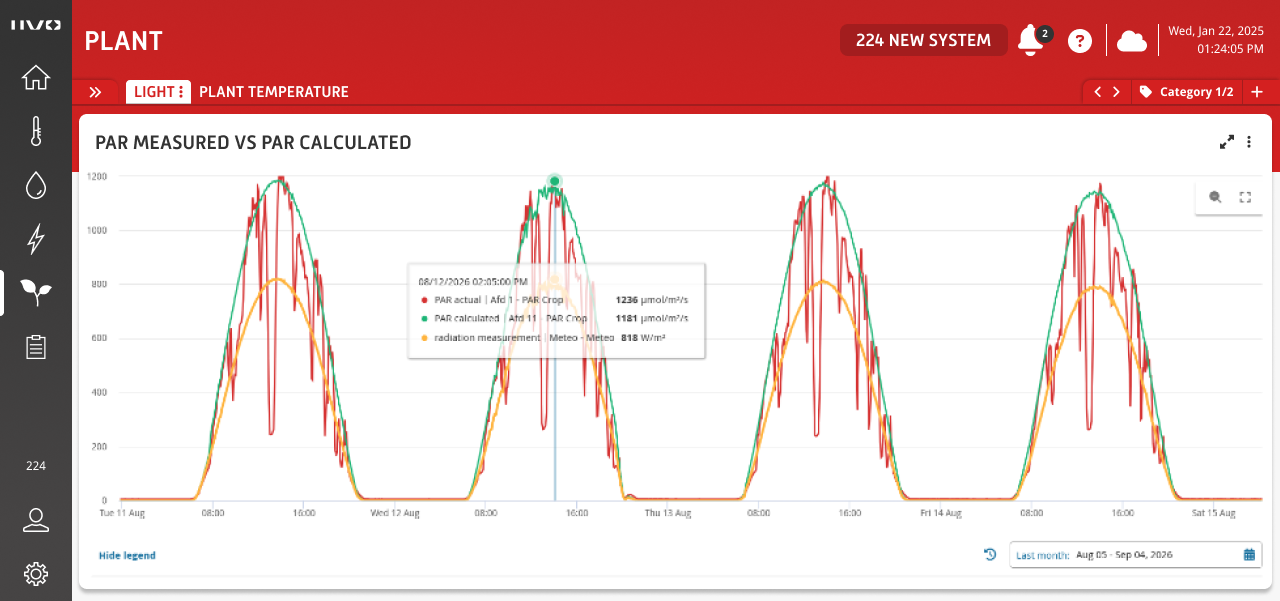
However, a follow-up (fair) question is being asked: “How many PAR sensors do I need?
Just two! The rest can be calculated. With our PAR-calculated soft sensor, you can achieve the same results while maintaining your investment costs at the minimum. By using our internal knowledge and research from past years, we created a PAR-calculated value that your greenhouse controls can be steered by.